
Ever since gasoline became unleaded, we’ve heard relatively little about lead pollution and its harmful health effects. The issue receives little publicity, even though, unfortunately, it still affects large numbers of people today. I’m convinced that we can do something about it on our own level, so let’s take a closer look at the problem and possible solutions.
Health Risks
Lead is a toxic heavy metal that today enters our bodies not so much from the air or from lead-based paints, but rather through water leaching lead from old, outdated building pipes or fixtures. Since it does not cause a metallic taste or odor, it can only be detected through laboratory testing. Lead is one of the most potent, broad-spectrum neurotoxins, damaging nearly every system in the body.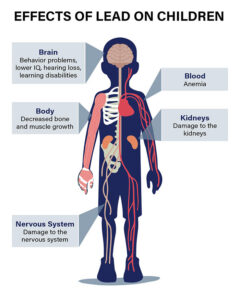
- Lead is a potent neurotoxin that is particularly harmful to the developing brain, which is why children and pregnant women are most at risk.
- It causes developmental abnormalities in fetuses and infants and can severely impair mental and physical development.
- In children, it causes a decrease in IQ, learning difficulties, and behavioral disorders, and affects cognitive functions.
- Lead exposure increases the risk of cardiovascular disease, stroke, kidney disease, and premature death.
- In adults, it can raise blood pressure and cause nerve damage and memory impairment.
- Long-term lead poisoning can cause mental and physical developmental disorders. Lead is excreted slowly and accumulates in the body.
- It inhibits hemoglobin production, which can lead to anemia, fatigue, and weakness.
Social Impacts
Once lead enters the body, it can increase aggression, raise rates of juvenile and adult crime, and reduce work efficiency.
Environmental Effects
Lead is harmful not only to the human body but also to the environment. Aging water supply systems and industrial production processes contribute to lead contamination, which affects the quality of soil and water resources in the long term.
Public Health Crises
The city of Flint, Michigan, is a striking example of a lead-contaminated drinking water crisis. There, elevated lead levels caused by aging water pipes led to serious health problems. The lessons learned from this experience can help prevent similar incidents in other communities.
Air Pollution
Now that I’m conducting research on this topic, it makes me feel bad to think about how much I loved the smell of gasoline and sputtering engines when I was a child…
Although leaded gasoline has been banned in most countries, lead remains in the environment for decades; it is constantly released back into the air from the soil and road dust, and can still be detected today in the air in London, for example (32–43% of the lead in the air originally came from leaded fuel) . Although air pollution has improved significantly worldwide, it is still worth learning from the mistakes of the past and drawing the right conclusions!
For a long time, air pollution caused by the use of leaded gasoline—introduced as a result of the automotive industry’s development—was a sensitive and controversial issue. From a capitalist perspective, the goal was to reduce engine wear and tear and extend their lifespan. The unexpected side effect came later: the deadly consequences for the living environment. Doesn’t this cause-and-effect relationship sound familiar in many ways even today?!
Perhaps you’ve heard that there are concrete, quantifiable statistics on IQ declines resulting from lead exposure from leaded gasoline. This is one of the best-documented cases of environmental health damage from the 20th century, affecting generations born in the 1960s and 1970s. According to a study by Trinity College published in the journal *PNAS* in 2022, childhood lead exposure from leaded gasoline cost the U.S. population a total of 824 million IQ points. This affects more than 170 million Americans—that is, half the entire population.
According to statistics reported by NBC News, this represented an average loss of 2.6 IQ points for every affected American adult. For the most affected age group (those born between 1960 and 1970), the measurable decline was 5.9–7 IQ points. Beyond the primary effect, the social impact is also significant, as the shift in the overall IQ distribution places more people in the lower cognitive range, which causes measurable negative effects in areas such as academic performance, income, and health. According to economic models, a 1-point drop in IQ results in an average lifetime earnings loss of $20,000–25,000 per person. Based on the scientific literature, the total economic cost of lead-contaminated air and lead exposure in the U.S. may have been at least $500–1,000 billion.
Lead-Contaminated Drinking Water
Tens of millions of consumers in the EU may be at risk from lead-contaminated drinking water—primarily those living in older buildings. According to the best estimates, 25–30 million Europeans live in homes where lead pipes may be present, and for 4–6 million of them, there is a real risk of lead levels exceeding the limit. This does not mean that all of these people are drinking contaminated water, but rather that the potential for exposure exists.
Yet the concept of lead-contaminated drinking water is still unfamiliar to many, despite its potentially significant harmful effects on the human body. Since my blog posts primarily focus on water-related topics, let’s take a closer look at what’s going on here!
Why is it important to address the issue of lead-contaminated drinking water?
Numerous pieces of evidence indicate that the effects of substances hazardous to health released into the environment – according to the OECD Hazard Report – (persistent chemicals, PFAS compounds, nuclear waste, heavy metals) endanger our entire society and are now culminating in the health of the younger generation. It is evident that in “developed” societies today, the number of people suffering from autoimmune and neurological disorders (e.g., ADHD) is on the rise. It will be very difficult to reverse these trends, and we shouldn’t expect anyone to solve the problem overnight. What can we do ourselves?
- Raising awareness of risks: People are often unaware of the impact that lead-contaminated drinking water has on their health. It is important to provide them with information on how they can protect themselves against this danger.
- Responsible decision-making: Families and communities have the right to know the quality of the water they consume. Information helps them make responsible decisions about their water consumption.
- Long-term health preservation: Ensuring access to safe drinking water is essential for preserving the health of our communities. Prevention is always cheaper and more effective than treating diseases that have already developed.
- Environmental awareness: Minimizing harmful substances is part of an environmentally conscious lifestyle. Removing lead from drinking water can contribute to a more sustainable future.
The problem of lead in drinking water is not merely a technical challenge; it is also a social responsibility, as everyone has a stake in having access to safe drinking water. Through proper education and preventive measures, we can save lives and ensure the health of our communities.
Where can water become contaminated with lead?
Many cities still use old water pipes that contain lead. Lead can easily leach into drinking water from these pipes, especially if the water is acidic or soft. As the pipes age, the lead gradually dissolves into the water. Particularly serious situations can arise in areas where these systems have been in operation for a long time.
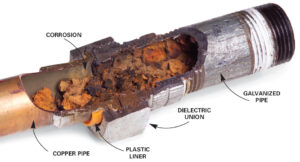
- Small towns and rural areas: Due to outdated infrastructure, lead pipes can also be found in many rural communities. Smaller communities often do not receive sufficient attention when it comes to modernizing their water systems, which can contribute to contamination.
- Old apartments: European cities are home to numerous historic apartments, which may also contain lead pipes. These systems are not always replaced during renovations, so residents remain continuously exposed.
- Industrial activities: During ore processing, large amounts of lead can be released into the air, soil, or water.
- Paints and products: Older paints, especially in buildings that have not been renovated, often contain lead.
When can we speak of lead contamination?
Currently, the permissible limit for lead in drinking water throughout the European Union is 10 micrograms per liter (μg/l, which is equivalent to 0.01 mg/l). The EU is introducing stricter limits; starting in 2036, the permissible lead concentration will be 5 µg/l, which is one of the strictest standards in the world.
Water utilities strictly monitor drinking water quality; however, they are only responsible for ensuring compliance with mandatory drinking water quality standards up to the point of the service water meter. While the quality of the supplied water is generally adequate, this alone does not guarantee that non-toxic water will flow from the tap into our glasses.
If a laboratory test confirms the presence of lead in drinking water, the sources of contamination are relatively easy to identify. Here are a few examples of what these sources are and what problems they can cause.
What can we do?
The problem of lead in drinking water can pose a serious threat, but the following measures may help prevent problems.
- Check the applicable limit values: Review the water quality reports published by your local water utility, which list the levels of all components in the water!
- Take a water sample: If you suspect that your home’s water supply may be contaminated with lead, take a water sample and have it tested for lead levels at an accredited laboratory.
- Source of tap water: Find out where your tap water comes from! Water drawn directly from the ground, or from areas with old water supply systems, is more likely to contain lead.
- Regular inspections: If your water system is problematic, it is recommended that you have old water pipes inspected regularly by a professional and replaced if necessary.
- Public awareness: It is important to inform the public about drinking water quality and how they can reduce the risk of lead poisoning.
- Government measures: It is necessary to comply with drinking water safety regulations and support regulations that mandate the replacement of old water systems and the monitoring of such replacements.
Addressing the problem of lead in drinking water is therefore extremely important at both the individual and societal levels. Replacing outdated water supply networks and lead pipes, as well as implementing stricter monitoring and regulatory measures, are key to protecting public health and preserving the environment.
Prevention and Safe Drinking Water
Safe water consumption is essential for maintaining good health. If it turns out that you are affected by the problem of lead-contaminated drinking water, the following tips may help you find a safe drinking water solution.
I won’t go into detail about bottled water in this article, even though most people rely on this still-affordable solution to access drinking water. It’s a “necessary evil,” but it’s very concerning and certainly not sustainable in the long run.
A useful tip is to let the water run: If you suspect you have lead pipes, let the water run in the morning or after the tap has been left closed for a long time (for 1–2 minutes) until it becomes completely cold. Do not drink this water, but you can use it for watering plants or washing dishes.
Home Solutions for Purifying Drinking Water
There are numerous household water purification devices and alternative water treatment solutions capable of removing some or all of the lead and other harmful substances from tap water. Any of the following water treatment technologies and systems are accessible and affordable for anyone.
- Reverse osmosis (RO) filter: This system effectively removes lead and other contaminants. It also strips beneficial minerals from the water, so you’ll need to find a way to replenish them. It is energy-intensive and expensive, and is typically installed as part of a home water system.
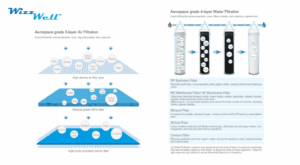
- Granular activated carbon (GAC) filters and carbon blocks bind lead particles. Make sure the filter cartridge packaging explicitly states its lead-removal capability. Most basic household water purifiers (e.g., refrigerators with built-in water dispensers) use this method.
- Mains-connected water dispenser: Many types and price ranges are available. A higher-quality unit can be quite expensive,
 costing as much as 1,000–1,500 euros. They generally offer a comprehensive solution and may be suitable for providing a household with healthy drinking water.
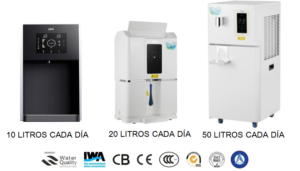
- Alternative water supply options: WizzWell atmospheric water generators (AWG) extract water from the purest source—the air. This water is purified by a state-of-the-art ultra-filtration system, and after remineralization and UV sterilization, the machine provides fresh, healthy, and great-tasting drinking water for small or large communities.
It’s important to understand that when water is “over-purified,” valuable mineral salts are also removed from the drinking water; as a result, the water not only becomes tasteless but is also unhealthy to consume in the long term—however, proper remineralization resolves this issue.
I like the efforts you have put in this, regards for all the great content.
Great content! Keep up the good work!
Great information shared.. really enjoyed reading this post thank you author for sharing this post .. appreciated
very informative articles or reviews at this time.
You’re so awesome! I don’t believe I have read a single thing like that before. So great to find someone with some original thoughts on this topic. Really.. thank you for starting this up. This website is something that is needed on the internet, someone with a little originality!
I appreciate you sharing this blog post. Thanks Again. Cool.