We don’t hear as much about the El Niño phenomenon these days. I don’t want to cause panic, but it might be worth staying informed about this issue that affects us all.
Global climate change is accelerating at a rapid pace these days, causing increasingly severe environmental and social disasters. However, weather reports consistently fail to mention that these climate change factors are primarily due to fossil fuels and carbon dioxide emissions. Despite global efforts to improve the situation, no significant improvement is expected (quite the contrary!), so we are best advised to prepare for the consequences.
The El Niño Phenomenon
It got its name (“the little boy”) from Peruvian fishermen, as it is most intense around Christmas. This is a natural climatic phenomenon characterized by unusual warming in the tropical central and eastern parts of the Pacific Ocean. The cycle, which occurs every 2–7 years, weakens the trade winds, causing extreme weather worldwide: heavy rainfall in South America, droughts in Australia and Asia, and a global rise in temperature. This phenomenon is the warm phase of the El Niño–Southern Oscillation (ENSO); the cold phase is called La Niña. It has an indirect impact on Europe; El Niño can often result in milder, wetter winters in our region. However, a massive global weather shift is currently underway as the multi-year La Niña officially collapses, giving way to a rapidly developing El Niño. Anyone interested in this topic at this level should read the detailed scientific analysis published two weeks ago on the Severe Weather Europe website.

How will the rapid collapse of La Niña trigger a massive global shift by 2026?
La Niña only set in during the first half of 2025 and barely lowered temperatures—if at all. By the end of the report, the jet stream began to meander like a snake, bringing successive waves of polar cold that broke apart and began its erratic path
The latest ocean analyses show significant subsurface warming in the tropical Pacific, which is expected to develop into a strong event that will reach Super El Niño status by the end of 2026. This impending event is driven by strong westerly wind bursts and a massive oceanic Kelvin wave currently rising in the eastern Pacific. Such intense warming in the tropical Pacific could fundamentally alter the global circulation system and trigger a domino effect extending to North America, Europe, and the rest of the world.
According to an article on the IFL Science website, the “new El Niño” could dramatically reshape the Earth’s weather patterns, and it is almost certain that previous heat records will be broken in the next two years.
What to Expect in 2026
Key fact: Scientists have observed “bubbles” of warm water beneath the ocean’s surface (Kelvin waves), which serve as “fuel” for the upcoming El Niño. The El Niño phenomenon is not just a heat wave; it is a massive energy shift in the Pacific Ocean that disrupts the atmosphere and affects billions of people. A video available on USOCEANGOV’s YouTube channel explains the El Niño–La Niña phenomenon with scientific rigor yet in an accessible way.
Weather Forecast
- Spring 2026 (now): The La Niña we’ve been experiencing in recent months is collapsing. We are in a rapid transition toward “ENSO-neutral” conditions, with a probability of over 90% in the next two months.
- Summer 2026: The likelihood of El Niño is rising rapidly. After May–July, El Niño becomes the dominant scenario (with a probability of nearly 60%).
- Late 2026: According to models, an organized and possibly strong El Niño will dominate the second half of the year, fully influencing the winter of 2026–2027.
What does this mean in practice?
- New temperature records: Since the planet is already experiencing historically high temperatures, the return of El Niño in 2026 could result in 2027 becoming the hottest year on record.
- Extreme weather events: The return of El Niño “guarantees” a shift in rainfall patterns. For example, stronger storms are expected in the United States, while severe droughts are anticipated in Australia and parts of Asia.
- Impact on Europe: Although Europe is less directly affected by the Pacific Ocean, a strong El Niño in the fall of 2026 could bring wetter and milder weather to Western Europe, but could also bring more unpredictable cold waves to the Balkans in the winter.
Expected ecological and economic impacts
The mechanism: When the winds “tire out”
Under normal conditions, cold winds blow from the Americas to Asia, pushing warm surface waters westward (toward Indonesia and Australia). This allows cold, nutrient-rich water to rise along the coast of South America.
During El Niño, these winds weaken. The warm water “slides” back eastward, covering the central and eastern parts of the Pacific Ocean. This massive heat mass alters the rise and circulation of air in the atmosphere.
Displacement of the jet streams
The heat emitted by the ocean acts as a “barrier” to the flow of air currents. The Pacific jet stream shifts further south and expands. This change in the atmospheric “highway” determines where rainfall occurs and where droughts prevail:
- The Americas: The southern states of the U.S. and South America experience torrential rains and flooding.
- Asia and Australia: Normally wet areas experience extreme drought, leading to crop failures and massive wildfires.
Economic and Financial Setbacks
Relevant studies highlight that El Niño has a direct impact on consumers’ wallets worldwide.
- Agriculture: The drought in Asia is affecting rice, sugar, and coffee production, leading to higher prices.
- Fishing: In Peru, the lack of cold water (which provides food for fish) is devastating local fisheries.
- Infrastructure: Floods are destroying roads and power grids, with damages amounting to trillions of dollars over the years.
The dangerous synergy of El Niño and climate change
El Niño has been occurring naturally for millennia, but it now appears on a planet burdened by warming caused by modern civilization. For this reason, the ocean has absorbed 90% of the excess heat from greenhouse gases, and when El Niño arrives, it adds an extra “heat layer,” triggering extreme temperature effects that break every historical record. This makes extreme weather events (e.g., hurricanes, droughts) much more violent than in the past.
El Niño is therefore not an isolated weather event, but a reminder of the complexity of Earth’s systems. As the climate changes, understanding these cycles is essential to preparing for a future where climate challenges are becoming increasingly intense.”
Expected Water Supply Problems in Europe
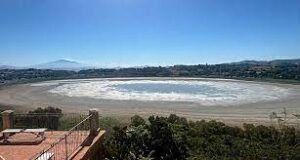
The El Niño–La Niña cycle primarily alters precipitation distribution and temperature patterns in Europe, which indirectly but significantly affects drinking water supplies. According to research, the frequency and severity of hydrological droughts are increasing mainly in Southern Europe, while Northern Europe may experience periods of excess precipitation.
The ENSO phenomenon (El Niño–La Niña) affects drinking water supply in Europe not directly, but through changes in atmospheric circulation. The greatest risk is the intensification of droughts in Southern Europe, while in Central Europe, warmer, drier summers and variable precipitation patterns pose the main challenge.
What risks does this pose to Europe’s drinking water supply?

- Declining replenishment of surface and groundwater resources.
- Increasing water demand (agriculture, cooling needs, residential consumption).
- Quality issues: low water levels → higher concentrations of pollutants.
- Regional disparities: water scarcity in Southern Europe is increasing, while Northern Europe may even experience water abundance.
Alternative water source: atmospheric moisture
We have a natural water source that we are only now beginning to discover and utilize. The vast, inexhaustible supply of moisture in the atmosphere, when harnessed with the right technology, can provide water to individuals and communities in regions struggling with water shortages.
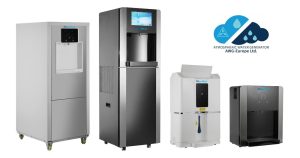
Today, more and more people in Europe are purchasing WizzWell atmospheric water generators, which produce high-quality, always-fresh drinking water in both domestic and industrial quantities. Make a smart decision and prepare for a water shortage!